
Old Havana, the historic
district of Cuba’s capital, was founded by Spanish colonists in 1519. Its
churches and fortresses carved from white limestone, Triangle Trade–era
mansions, and airy courtyards tell a story of centuries of wealth and its
expression by Cuba’s military and mercantile elite. But the district lost
prominence in the early 20th century as economic growth shifted away from the
city center, and by the time of the Cuban Revolution in the 1950s—when the
country started to shut out foreign visitors, who once packed its bars and
beaches—it had fallen into disrepair.
Today, Old Havana is
the site of one of the world’s most ambitious urban-revival projects. The force
behind this transformation is Eusebio Leal Spengler, the city’s chief
historian. In the early 1990s, when the collapse of the Soviet Union pitched
Cuba into economic crisis, Leal persuaded President Fidel Castro to approve the
establishment of a tourist-management company, called Habaguanex, that would
bring foreign investment back to the island. Since then, Leal’s office claims
to have steered more than half a billion dollars to the historic district and
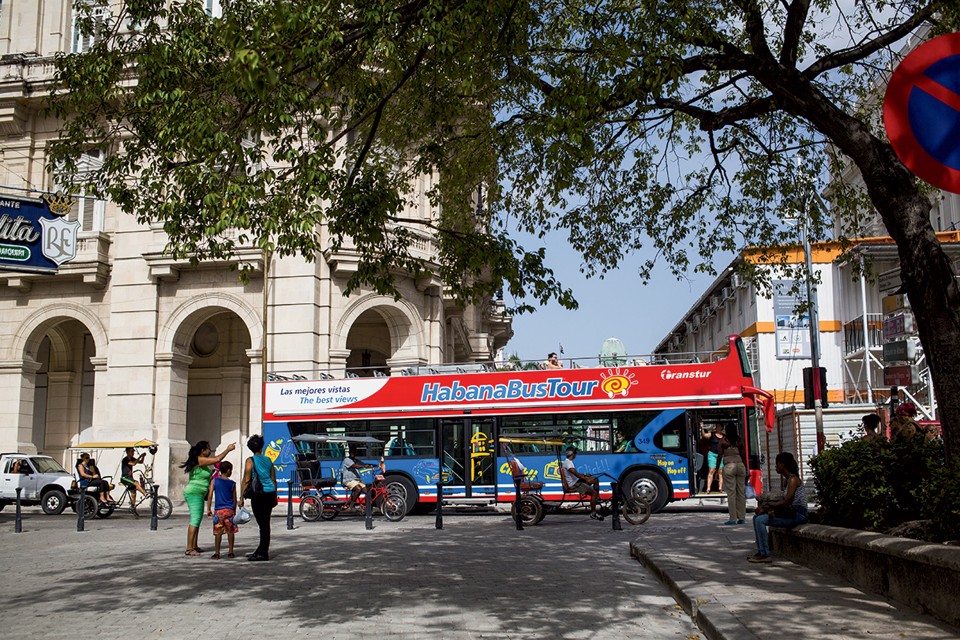
created more than 13,000 jobs. Habaguanex controls some 20 hotels, 40
restaurants, and 50 bars and cafés, as well as dozens of stores that include a
French pastry shop, a florist, and a United Colors of Benetton. Thousands of
tourists now arrive each day in Old Havana, an area covering less than a square
mile, making it the nation’s most popular destination for foreigners.
It has been a
spectacular turnaround—but also an unsettling one. Although Castro said he
wanted to restore the tourism industry as a “gold mine through which the country
can obtain foreign exchange,” he regarded its cultural and financial influence
on Cubans themselves with extreme caution. Until 2008, when Castro ceded power
to his younger brother, the government forbade Cubans to stay in tourist
hotels, including the grand Habaguanex lodges in Old Havana—part of a policy
that Castro’s critics called tourism apartheid.
Leal sees nothing
subversive about filling the streets with foreign visitors. To the contrary, he
has described his project as the next chapter in the Cuban Revolution. Part of
every dollar tourists spend at shops and restaurants pays to restore buildings
that host museums, libraries, schools, and clinics; new hotels for foreigners
fund new housing for locals. Leal’s approach to restoration—capitalist tactics
for socialist results—has been resoundingly praised by the international
architecture community.
But it has also
heightened the contrast between squalor and splendor, creating a stark division
in a land of supposed equals. Two-thirds of Old Havana remains unrestored, and
blocks away from the new restaurants and souvenir shops, residents still live
in tenements that threaten to collapse around them. Others have been displaced
from their homes as the renovation has progressed. Opportunities for corruption
abound. The thaw in U.S.-Cuba relations, expected to release big flows of
tourists and capital, will likely accelerate the area’s changes. Will more
outside money help Leal preserve Old Havana’s character—or hasten its decline?
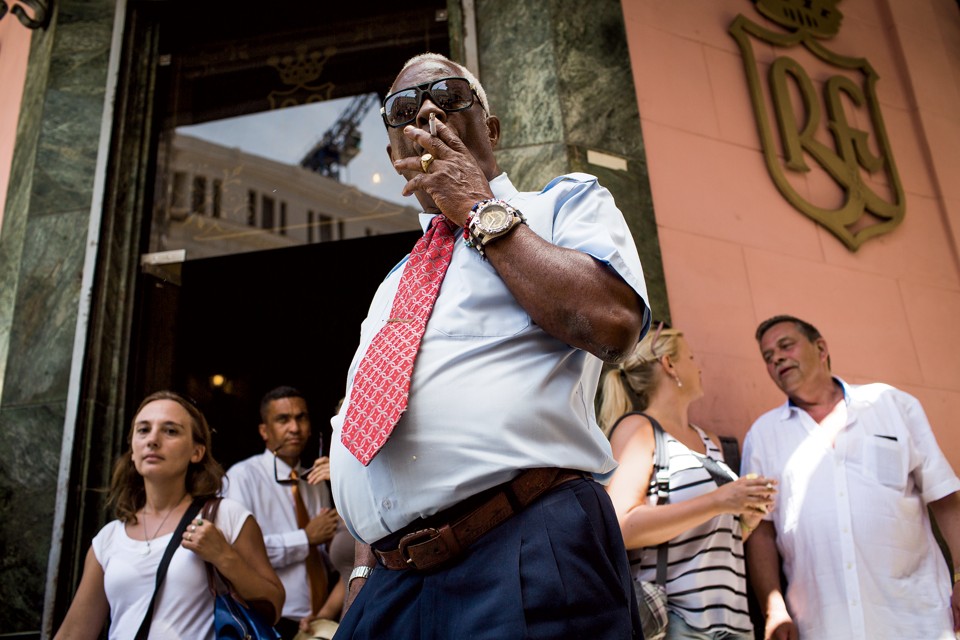
Some Habaneros are
reluctant to relocate from their crumbling homes as Leal’s project moves
forward—especially now that they anticipate a boom in American visitors. “Right
now, everyone is trying to create a business related to tourists,” Daniel de la
Regata, an architect who worked for several years in Leal’s office. “They’d
rather have money in their pocket than a good place to live.” (Photo by Lisette
Poole)
HENRY GRABAR SEPTEMBER 2015 ISSUE

No comments:
Post a Comment