
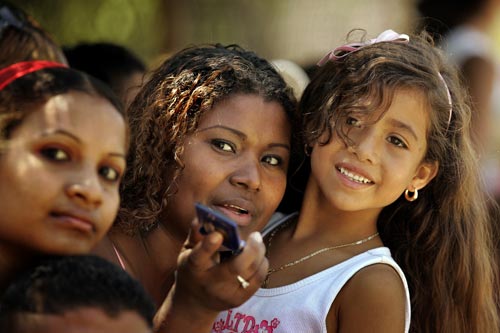
For the first time
ever, people of African descent living in Mexico were able to identify
themselves as black in the national census.
Mexico’s 2015
population survey, released Dec. 8, counted 1.38 million people of African
heritage, representing 1.2% of the country’s population (link in Spanish.) Most
live in three coastal states, including Guerrero, where they account for nearly
7% of the population, and overall they are poorer and less educated than the
national average, Mexico’s census bureau (INEGI by its acronym in Spanish) has
found.
Including an “Afro”
category in the census is part of a push to recognize Latin America’s black
communities. Like the US, Latin America and the Caribbean have a history of
slavery that resulted in a large number of residents of African descent—about
150 million, accounting for about 30% of the region’s population, according to
the United Nations.
Similar to their
American counterparts, Latin America’s black population also has been the
target of racism, something that some countries are starting to address with
anti-discrimination laws and affirmative-action policies. Governments have also
committed to making more improvements to protect black Latin Americans as part
of the UN’s international decade for people of African descent, which started
this year.
But there’s still a
long way to go for black Latin Americans to achieve equal status. Earlier this
month, Zeid Ra’ad Al Hussein, the UN’s High Commissioner for Human Rights,
speaking at a meeting in Brasilia, said he was “struck by the enormity of the
task before us.”
Compared to other
countries in Latin America, Mexico had a smaller influx of African slaves.
Still, many thousands were forcibly brought to New Spain, as the country was
known when it was a Spanish colony, to work in silver mines and sugar
plantations.
After independence,
this population became largely invisible because it didn’t fit into the
Mexico’s new national identity, built on the idea of mestizaje, or the mixing
between Spaniards and indigenous people, says Citlali Quecha, a researcher at
National Autonomous University of Mexico who has studied the country’s black
community.

“All those who were
different were considered foreigners,” she tells Quartz.
After fighting for
recognition for more than two decades, Afro-Mexican activists are finally
getting some traction. Being included in the census as distinct category is a
big step. Mexico’s Human Rights Commission has also vowed to fight
discrimination, and organized a forum (link in Spanish) earlier this year to
discuss policies to achieve that.
And last month, a
gathering of Afro-Mexican communities—once a relatively small affair—was
attended by several high-ranking government officials, including the head of
the senate’s commission on indigenous rights, who accepted a proposal (Spanish)
to have black Mexicans formally recognized in the constitution.

No comments:
Post a Comment